Skip to content

Communications & marketing
Phoenix · Open to remote roles

Writing · Video · Digital marketing

I turn complex work into stories people care about.

Before I write a story or pick up a camera, I want to understand who it’s for. Where are they in their life? Where do they want to be? What’s in their way? And how can what I’m about to share help them?

Those answers shape what I write, film and design, and where I share it. Sometimes it’s social media. Other times it’s email, a website or print. At ASU, that meant helping people understand the research and giving prospective students a clearer picture of what they could study there.

That’s me on the left.

32 ASU features12 collaborative program videosCommunications across five countries

01 / Selected work

Selected work

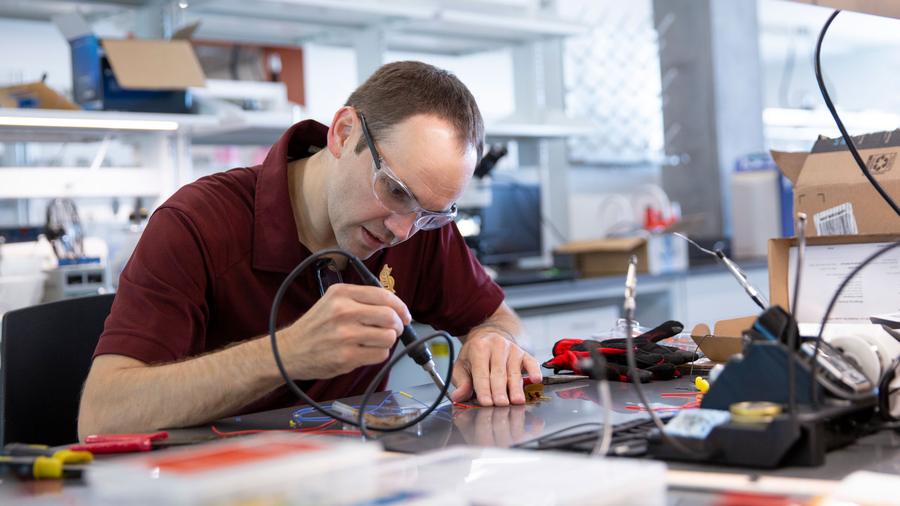
Konrad Rykaczewski works in his lab, photographed for The real reason we sweat. Photograph: Erika Gronek / ASU.01

Arizona State University

Research & student stories

Research can matter to people who will never read a scientific paper. I interviewed researchers, students and alumni to show what their work could change and what it was like to study at ASU. Thirty-two features, published by ASU Engineering News.

Reporting · Writing · Photography

Explore the work
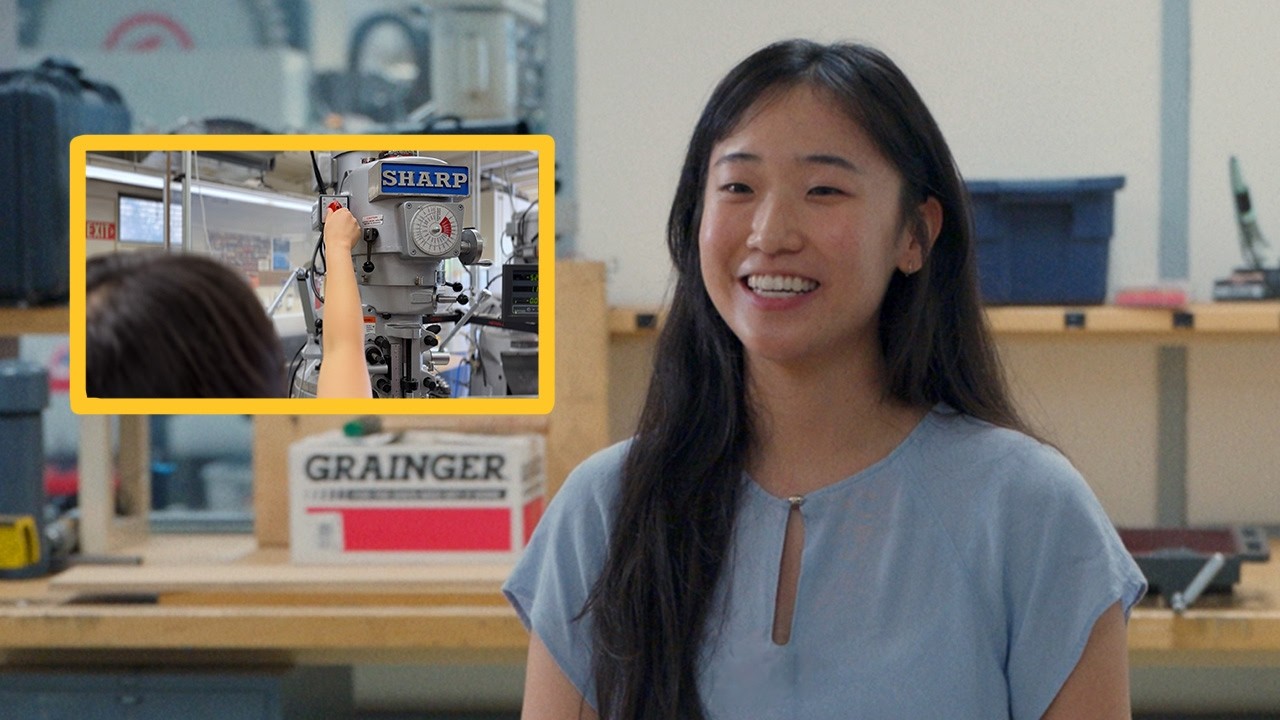
What it's like to study mechanical engineering at ASU, video thumbnail.02

Arizona State University

Marketing videos

Prospective students need to picture what they could study and do. I worked with a freelance videographer on twelve videos across four engineering programs, interviewing people and directing lab shoots to bring that experience into view.

Interviews · Production · Direction

Explore the work
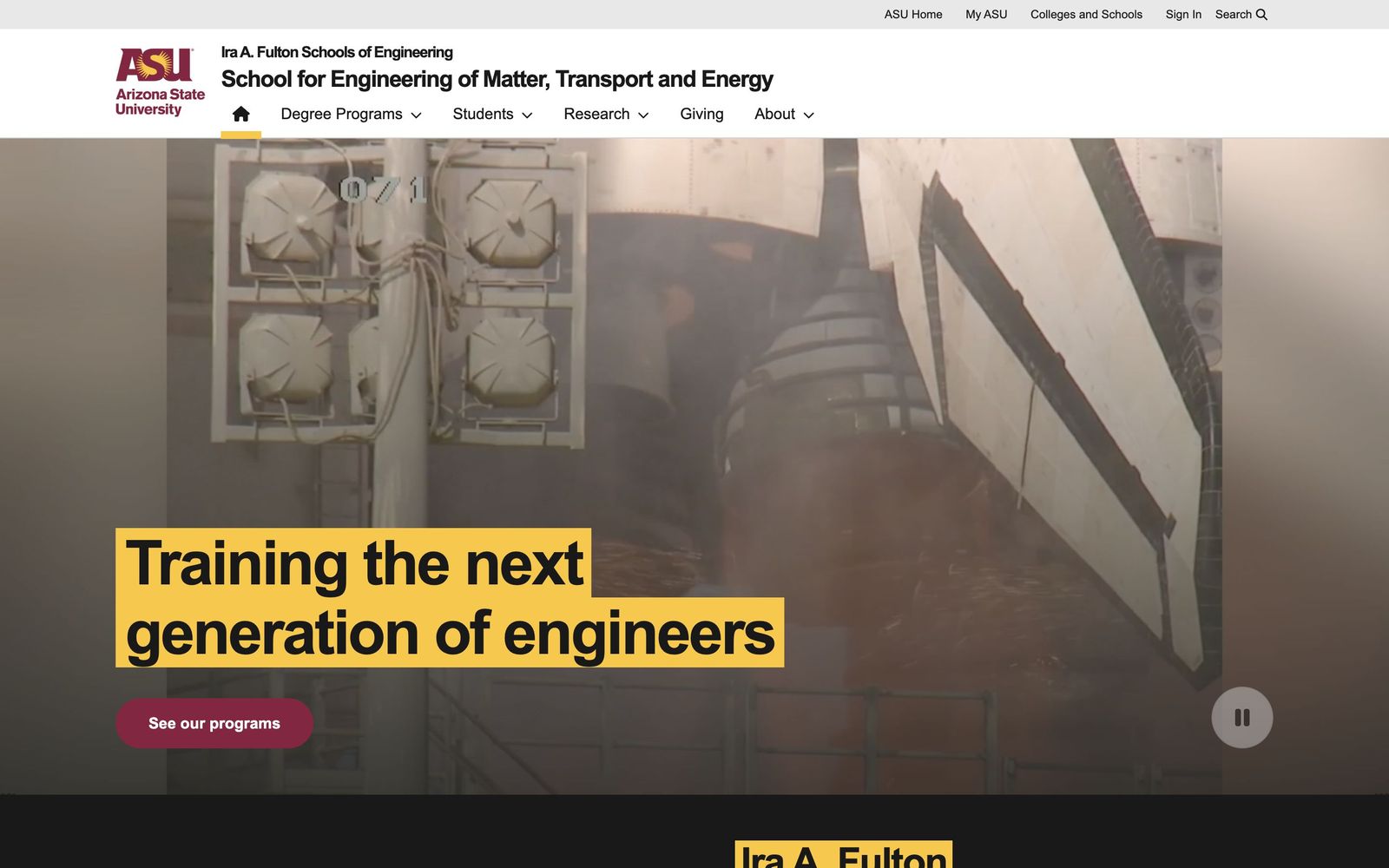
ASU School for Engineering of Matter, Transport and Energy website03

Arizona State University

ASU school website

I planned and updated content to help prospective students and parents find the information they needed to evaluate ASU programs. I worked with developers and school stakeholders on the rebuild, including navigation and accessibility.

Content planning · Stakeholder coordination

Explore the work

02 / Inside a story

What comes after silicon?

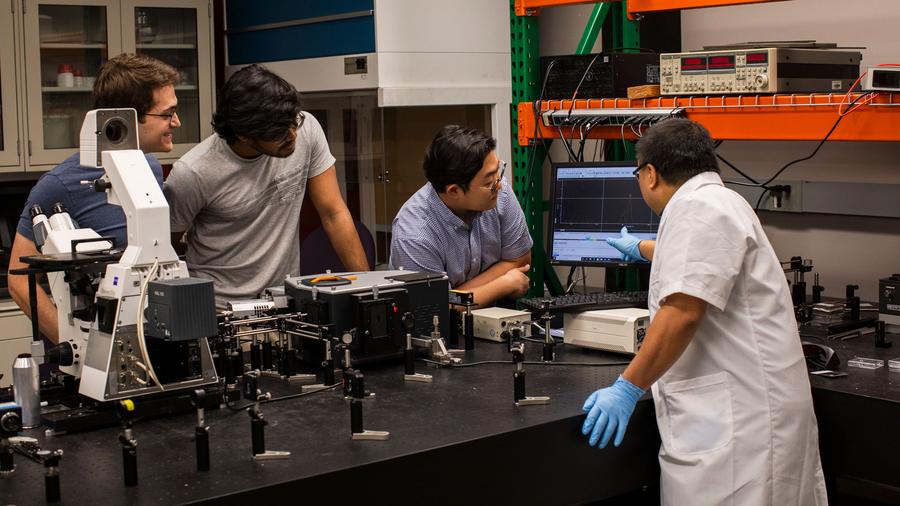
Sui Yang (right), an assistant professor of materials science and engineering in the School for Engineering of Matter, Transport and Energy, part of the Ira A. Fulton Schools of Engineering at Arizona State University, in his lab with graduate students (right to left), JaeWoo Park, Abhishek Saji Kumar and Jahan Bruce. Yang received the 2026 National Science Foundation Faculty Early Career Development Program (CAREER) Award to pioneer a new way to develop optical materials. Photographer: Roger Ndayisaba/ASU

Sui Yang and graduate students in the lab. Photograph: Roger Ndayisaba / ASU.

01 · The problem

Sui Yang’s research deals with controlling light at the molecular scale. The challenge was to make that work understandable to someone outside the field and give them a reason to care about what it could make possible.

02 · My contribution

I used silicon as a familiar starting point and asked what could come next. I opened with the internet, medical imaging and solar panels before introducing the science. Then I used an apartment-building analogy to explain how arranging molecules changes a material. The reader gets a reason to care before the technical detail.

03 · The published work

I reported, wrote and photographed the story for ASU Engineering News. It connects a faculty research project to technologies people use, showing why the work happening at ASU matters beyond the lab.

Read the published story

From a colleague

“He has been very proactive in keeping this project on track, and his efforts are helping to create a new process for handling these types of video projects.”

Dan Traynor

Manager of Creative Services,
Ira A. Fulton Schools of Engineering, Arizona State University

03 / Selected writing

Feature articles

Sui Yang (right), an assistant professor of materials science and engineering in the School for Engineering of Matter, Transport and Energy, part of the Ira A. Fulton Schools of Engineering at Arizona State University, in his lab with graduate students (right to left), JaeWoo Park, Abhishek Saji Kumar and Jahan Bruce. Yang received the 2026 National Science Foundation Faculty Early Career Development Program (CAREER) Award to pioneer a new way to develop optical materials. Photographer: Roger Ndayisaba/ASU

ASU Engineering News · 2026

What comes after silicon?

Assistant Professor Sui Yang receives 2026 CAREER Award to develop materials that could surpass classical capabilities by controlling light at the molecular level.

Read the article
Konrad Rykaczewski, an associate professor of mechanical and aerospace engineering in the School for Engineering of Matter, Transport and Energy, part of the Ira A. Fulton Schools of Engineering at Arizona State University, works with a soldering iron in his lab. In a study published in the Journal of the Royal Society Interface, he recently revealed new insights into sweating mechanisms. Photographer: Erika Gronek/ASU

ASU Engineering News · 2025

The real reason we sweat

ASU Assistant Professor Rykaczewski reveals the key to optimizing cooling in extreme heat in a study published in the Journal of the Royal Society Interface.

Read the article
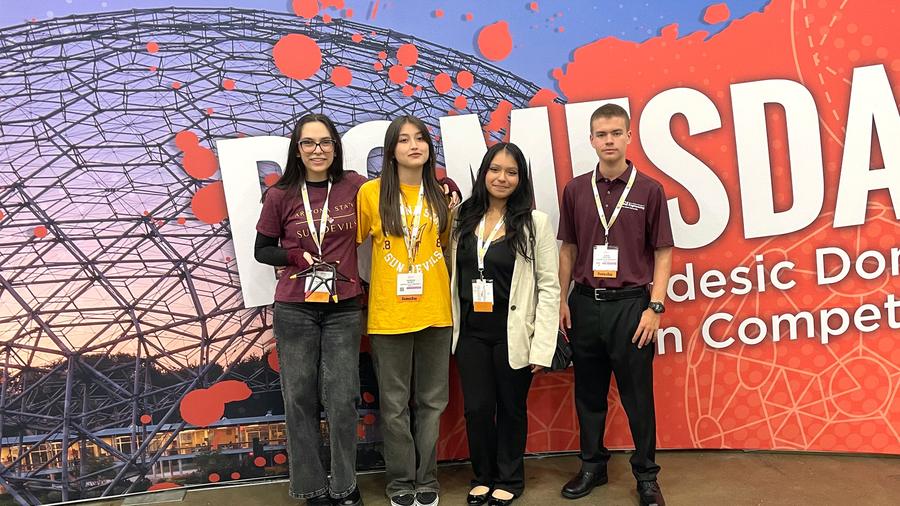
Left to right: ASU first-year students, Katelyn Flores, Handan Aksoy, Priscilla Munoz and Adam Fowler. The team won the Best-In-Destruction Award at the 2025 ASM International DomesDay competition in Detroit, Michigan. Photo courtesy of Hamed Arami

ASU Engineering News · 2026

Engineering failure

A team of first-year ASU students won an award for building a dome that failed less destructively at the 2025 ASM International DomesDay competition.

Read the article